







Search Results for: thin milk foam

What to Do When Milk Foam Is Too Thick, Separated, or Too Thin? Practical Fixes for Pouring Pitcher and Pre-Mixing in Latte Art
Mistakes when steaming milk foam are occasionally unavoidable—foam that is too thick, too coarse, too thin, or milk and foam that have separated will all make latte art difficult. This article compiles several practical milk foam repair methods, including shaking and tapping the pitcher, using a spoon to scoop out excess foam, pouring the milk into another pitcher, and pre-blending techniques, and explains in detail the principle and points to note for each method. It also explains why pouring into another pitcher can improve milk foam fluidity, and how pre-blending helps thin milk foam successfully complete patterns. At the end, Front Street Coffee-related recommendations and further reading are retained, making it suitable for coffee enthusiasts who want to improve their latte art skills. [more…]

Does latte art affect the flavor of a flat white? An analysis of thin milk foam steaming techniques and key preparation points
Many coffee enthusiasts notice that some coffee shops serve flat white without latte art, which raises questions: should flat white have latte art? Does the absence of latte art affect the taste of the coffee? In fact, latte art appeared much later than the birth of classic milk coffees like latte and cappuccino, and whether latte art is present or not does not directly change the flavor of the coffee. What truly affects the taste are the ingredients, espresso extraction, milk frothing, and the degree of integration. Through comparative experiments, Front Street Coffee found that flat whites with and without latte art show no difference in mouthfeel or taste. The milk foam of a flat white is extremely thin, less than 0.5 cm in thickness, and highly fluid, making latte art quite difficult—though not impossible. This article will analyze the necessity of latte art on flat white and the key points for frothing thin milk foam, from the perspectives of experimentation and preparation. [more…]

Australian White Coffee Production Details: Analysis of Thin Milk Foam Texturing, Integration Techniques, and Latte Art Challenges
The flat white is a milk coffee that has no clear definition yet heavily tests a barista's skill. It emphasizes less milk, thin microfoam, and a strong coffee flavor—any slight deviation in any step can easily turn it into a latte or cappuccino. This article starts with controlling microfoam thickness, breaking down in detail the aeration time, steaming temperature, pouring technique, and latte art challenges of a flat white, and combines them with the extraction parameters of Front Street Coffee's specialty espresso blend to explain how to make a flat white with rich crema and a full-bodied mouthfeel. [more…]

The Milk Foam Thickness Standard for Flat White and the Latte Art Controversy: The Crafting Logic Behind 0.3 to 0.5 Centimeters
How thick should the milk foam in a flat white really be? Why do some cafés not do latte art when serving a flat white? Behind this lies the historical origins of the flat white and the different brewing philosophies across countries. This article will take you through the evolution of the Flat White from its birth to its global popularity, analyze the differences between New Zealand and Australia in defining the flat white, and explain why thin microfoam is the key feature that distinguishes a flat white from a latte or cappuccino. At the same time, we will also explore the technical conflict between latte art and thin microfoam, and share Front Street Coffee's actual parameters and bean selection approach for making a flat white. [more…]

Why Can't You Pull Lines in Latte Art Etching? Mastering Milk Foam Thickness and Steaming Technique Is Key
Many coffee enthusiasts try latte art themselves after watching videos, only to find that they just can't get the rippled lines to come out. In fact, the problem usually lies in the milk foam—ripple patterns place extremely high demands on the thickness and denseness of the milk foam. Drawing on the hands-on experience of Front Street Coffee, this article explains in detail how to steam thin yet dense milk foam suitable for ripple patterns by controlling the position of the steam wand, the steaming angle, and the amount of air intake, and summarizes four common problems—over-blending, foam that is too thin, the pitcher spout touching the cup, and uneven swirling—to help you find the real reason your latte art is failing. [more…]

What kind of coffee is Flat White? An analysis of the ratio, characteristics, and flavor profile of Australian White coffee
Flat White is a hot milk coffee that has gained great popularity among coffee lovers in recent years, known for its thin milk foam, small cup size, and rich coffee flavor. It originated from the local evolution after Italian immigrants brought espresso to Australia after World War II, and quickly became popular after Starbucks introduced it to China in 2015 under the name "馥芮白". This article will provide a detailed analysis of the historical development of the Flat White, the controversies among baristas in different countries over its preparation methods, the differences in milk foam thickness and cup-to-volume ratios, and how Front Street Coffee presents this beverage, helping readers gain a comprehensive understanding of the unique charm of this coffee. [more…]

What's the difference between Australian White Coffee and Flat White? Starting with latte art, milk foam thickness, and the origin controversy
As a milk coffee, what exactly is the difference between a Flat White, a latte, and a cappuccino? Many coffee enthusiasts notice when visiting cafes that Flat Whites from different shops vary noticeably in cup size, foam thickness, and even whether latte art is present—differences that are closely tied to the drink's diverse definitions. This article starts from the phenomenon of latte art, sorts through the controversy between New Zealand and Australia over the Flat White's origin, analyzes how the drink's thin microfoam—its core characteristic—affects mouthfeel and the difficulty of pouring latte art, and explains the practical reasons why cafes choose not to pour latte art, helping readers understand the logic behind how this cup of coffee is made. [more…]

The Complete Guide to Flat White: Origins, Milk Foam Ratio, Taste Differences from Latte and Americano, and Front Street Coffee Bean Recommendations
Flat White (平白咖啡) is often called "澳白," "澳瑞白," or "馥芮白" in China, and it has become one of the most popular milk coffees in cafes in recent years. Where exactly did it come from? Why do different shops produce such different versions? This article begins with the origins of the Flat White, sorts out the differences between the Australian and New Zealand approaches in cup size, base, and foam thickness, explains why thin microfoam became the key indicator distinguishing a Flat White from a latte or cappuccino, and introduces Front Street Coffee's approach of presenting the Warm Sun blend with a double Ristretto in a 200 ml cup. At the end, it also lists four espresso blends suitable for recreating a Flat White at home, helping you find that cup of Flat White with rich aroma and balanced texture. [more…]

What exactly is Luckin's Aussie White Coffee? A full analysis of its taste differences from cappuccino and its ristretto espresso base
In winter, the order rate for hot milk coffee climbs, and the Flat White (also known as fu rui bai) has become a popular choice in recent years. This drink, originating from New Zealand and Australia, is characterized by thin milk foam, a small cup size, and ristretto, emphasizing that every sip lets you feel the fusion of milk foam and coffee liquid at the same time. This article breaks down the Flat White one by one, from its origin, the source of its name, and milk foam standards, to the extraction parameters and flavor performance of ristretto. At the same time, it compares the differences between the Flat White, latte, and cappuccino in milk foam thickness and mouthfeel, and shares Front Street Coffee's serving plan and flavor description. Whether you prefer a balanced milk coffee or a rich coffee aroma, you can find the cup that suits you. [more…]

Latte Art Tutorial | What to Pay Attention to When Steaming Milk Foam for Latte Art with a Semi-Automatic Espresso Machine, and How to Rescue Milk Foam That's Not Suitable for Latte Art
As we all know, if we want to create a beautiful latte art pattern, then in addition to having masterful latte art skills, a delicate milk foam is also essential! But even those who have already reached the pinnacle of expertise will occasionally have times when they fail to froth the milk well, perhaps because a momentary lapse makes the milk foam become [more…]

Judging Milk Foam by Sound: Practical Tips for Using the Steam Hiss to Gauge Froth Thickness and Density
When steaming milk, the sound made by the steam wand actually holds important clues for judging the condition of the milk foam. Many people practicing latte art easily run into problems such as foam that is too thin, too thick, rough, or separated, and one of the keys to solving these problems lies in the "hiss~ hiss" sound made during milk steaming. This article starts from the principle of steam intake, explains the milk foam states corresponding to different sounds, and, through an experiment comparing short bursts of hissing with prolonged hissing, explains how to use the length of the sound to control the amount of air intake, ultimately producing ideal milk foam that is fine, smooth, highly fluid, and suitable for latte art. The article also retains Front Street Coffee's related recommendations and address information, making it suitable for coffee enthusiasts to refer to during daily practice. [more…]
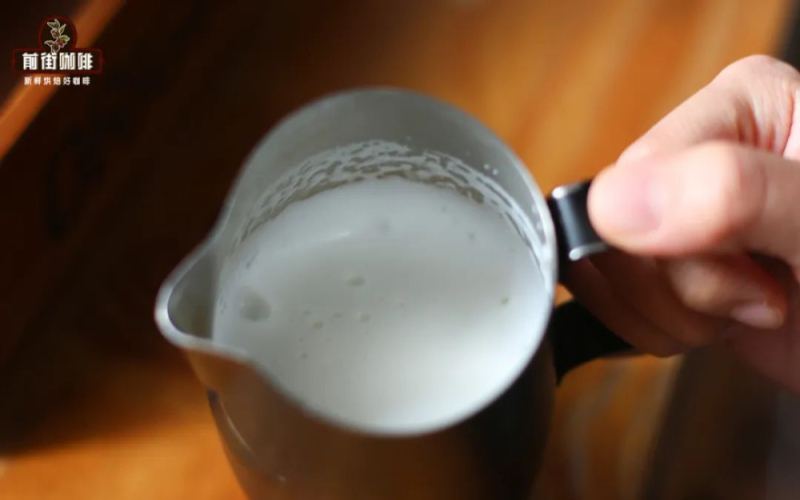
How to Fix Milk Foam That's Too Coarse or Too Thick? Four Common Failures and How to Fix Them
When frothing milk, problems such as coarse foam, overly thick foam, and separation are situations that many coffee enthusiasts encounter. This article focuses on the four most common types of milk frothing failures—foam that is too thin, foam that is coarse, foam that is too thick, and separation of milk and foam—analyzing the causes and effects of each one by one, and providing corresponding remedies. Among these, for the situation where there are only a small number of large bubbles on the surface of the foam, Front Street recommends eliminating them by shaking the milk pitcher; when there are many coarse bubbles, the "pitcher tapping" technique can be used. If the foam is too thick, it can be handled by "foam skimming," while separation problems require "pitcher pouring" to reintegrate the foam. It should be noted that pitcher pouring for rescue should be done no more than twice, otherwise the temperature of the foam will continue to drop, affecting the final result. [more…]

A Complete Guide to the Flat White: How to Properly Enjoy Its Thin Microfoam, Small Cup Size, and Ristretto Base
In the large family of milk coffees, the latte, cappuccino, and flat white each have their own fans. Front Street Coffee suggests that if you prefer a hot milk drink with a stronger coffee taste, you can start with a hot latte; if you love a thick, dense layer of milk foam, a cappuccino is the best choice; and if you want to experience a more concentrated, richer coffee flavor, a flat white is worth a try. The biggest difference between a flat white, a latte, and a cappuccino lies in the thickness of the milk foam—it must be kept within 0.3 centimeters to present a flat liquid surface. At the same time, in order to highlight the coffee as the main note, a flat white usually uses a small cup size of 150 to 180 milliliters and a double Ristretto as its base. This article will start from Front Street's production practice, breaking down the flat white's milk foam standards, cup size logic, extraction plan, and tasting points, to help you understand the professional craft of this "small latte." [more…]

A Guide to Flat White Milk Foaming Techniques and Italian Blend Bean Selection
Flat White has become a beloved milk coffee drink among coffee enthusiasts in recent years, renowned for its rich coffee flavor and delicate, thin microfoam. This article provides a comprehensive analysis of the controversy surrounding Flat White's origins, its preparation methods, and the recipe variations across different schools of thought, while also offering an in-depth comparison of latte, cappuccino, and Flat White in terms of cup size, foam thickness, and mouthfeel. In addition, we will recommend Front Street Coffee's classic espresso blend beans suitable for making Flat White, helping you easily recreate an authentic Australian-style white coffee at home. Whether you are a beginner just getting into specialty coffee or a seasoned enthusiast pursuing the ultimate flavor, this article will provide you with practical guidance and reference. [more…]

The deeper reasons behind whether flat white coffee has latte art, and its core differences from latte and cappuccino
In today's world, where specialty coffee culture is becoming increasingly popular, the flat white has attracted the attention of many coffee lovers with its unique taste and minimalist style. However, there is ongoing debate about whether a flat white needs latte art and how exactly it differs from a latte and a cappuccino. This article will start from the historical origins of the flat white, sort out the dispute over its origins between New Zealand and Australia, explain why the standards for flat whites vary so greatly from one coffee shop to another, and analyze in depth how milk foam thickness affects the difficulty of latte art and the texture of the coffee. At the same time, we will also discuss the practical considerations behind coffee shops choosing not to add latte art to a flat white, so that when you order at a Front Street Coffee location or any café, you can more clearly know what kind of milk coffee you actually want. [more…]

Espresso Milk Drinks | How to make a standard latte, cappuccino, and flat white? What are the differences between the three?
Even with the same few ingredients, as long as the proportions differ, we can create infinite possibilities—coffee is a perfect example. Take the "three milk coffee musketeers" that Front Street Coffee often shares: latte, flat white, and cappuccino. Their only ingredients are milk and coffee, yet when you drink them, whether in taste [more…]

A Detailed Explanation of the Three Major Causes of Jagged Edges in Latte Art Milk Foam and the Corresponding Adjustment Methods
When jagged edges frequently appear in latte art patterns, many people's first instinct is to blame their technique, yet repeated adjustments yield little improvement. In fact, the root cause of jagged patterns often lies in three areas: the condition of the coffee beans, the texture of the milk foam, and the steaming temperature. This article approaches the issue from the practical perspective of Front Street Coffee, breaking down the underlying principles behind each cause one by one and offering concrete, actionable solutions to help you create latte art with clean edges and smooth lines—even at home. [more…]

Analysis of the Capacity Difference Between Flat White and Latte: Origins and Key Production Points of Thin Milk Foam Espresso Milk Coffee
Both are espresso with milk, so why is a Flat White always a size smaller than a Latte? Behind this lies the original intent of the Flat White—to make the coffee flavor stand out, with milk playing only a supporting role. From the perspective of Front Street Coffee, this article sorts out the background of the Flat White's popularity in the 1980s, the respective approaches to making it in Australia and New Zealand, compares the specific differences between it and the Latte and Cappuccino in milk foam thickness and milk ratio, and includes the parameters for drinks served at Front Street stores along with purchasing advice for five espresso blends, helping coffee lovers recreate a rich, smooth Flat White at home. [more…]

Analysis of Flat White Coffee Milk Ratio and Bitterness: A Tutorial on Aurelio White Preparation Steps and Parameter Adjustment
Flat White, also known as Australian White or Fu Rui Bai, originated in Melbourne, Australia, and is renowned for its thin milk foam and rich coffee flavor. Like a latte or cappuccino, it consists of espresso and fresh milk, but it highlights the aroma of the coffee itself more, with the milk foam being only about 0.5 cm thick and level with the rim of the cup. This article provides a detailed analysis of the Flat White's origin controversy, milk foam thickness, Ristretto base extraction parameters, and milk ratio, and uses a 200 ml ceramic cup as an example to demonstrate the complete preparation process at Front Street Coffee stores, from grinding 20 grams of coffee and extracting 28–30 grams of Ristretto to adding 170 grams of hot milk, helping coffee enthusiasts master the core points of this beverage. [more…]

Why Does Latte Milk Foam Disappear So Quickly? Analyzing the Causes of Defoaming and Practical Ways to Slow Milk Foam Collapse
Many coffee enthusiasts find that when making a hot latte, the freshly steamed milk foam begins to collapse, separate, or even completely lose its shape within just a few minutes. Milk foam is essentially a bubble system formed by liquid films enclosing gas; once the liquid film thins to a certain point, the bubbles burst, so defoaming is an inevitable phenomenon. However, if the dissipation is abnormally fast, it indicates a problem with bubble stability. There are three main causes: the quality of the milk foam itself falling short, the crema of the espresso being too "dry," and mistakes during preparation accelerating the breakdown. This article will analyze from these three angles and combine Front Street Coffee's practical experience to help readers understand how to improve milk foam durability, making latte art and milk coffee texture more stable. [more…]